

Stability, Progress, and the Work Ahead

A Look at Our 2026 Survey Results
On July 15, 2026, Amici Cannis volunteers completed our latest annual street dog census in Cotacachi. Working in teams and across survey zones, volunteers recorded every dog observed, collecting information on age, sex, body condition, sterilization status, identification, and visible health concerns.
The purpose of these surveys is simple: data helps us measure progress.
For years, Amici Cannis has invested in sterilization, community education, and veterinary outreach. A census allows us to evaluate whether those efforts are making a difference and helps guide future programs where they are needed most.
A Stable Population
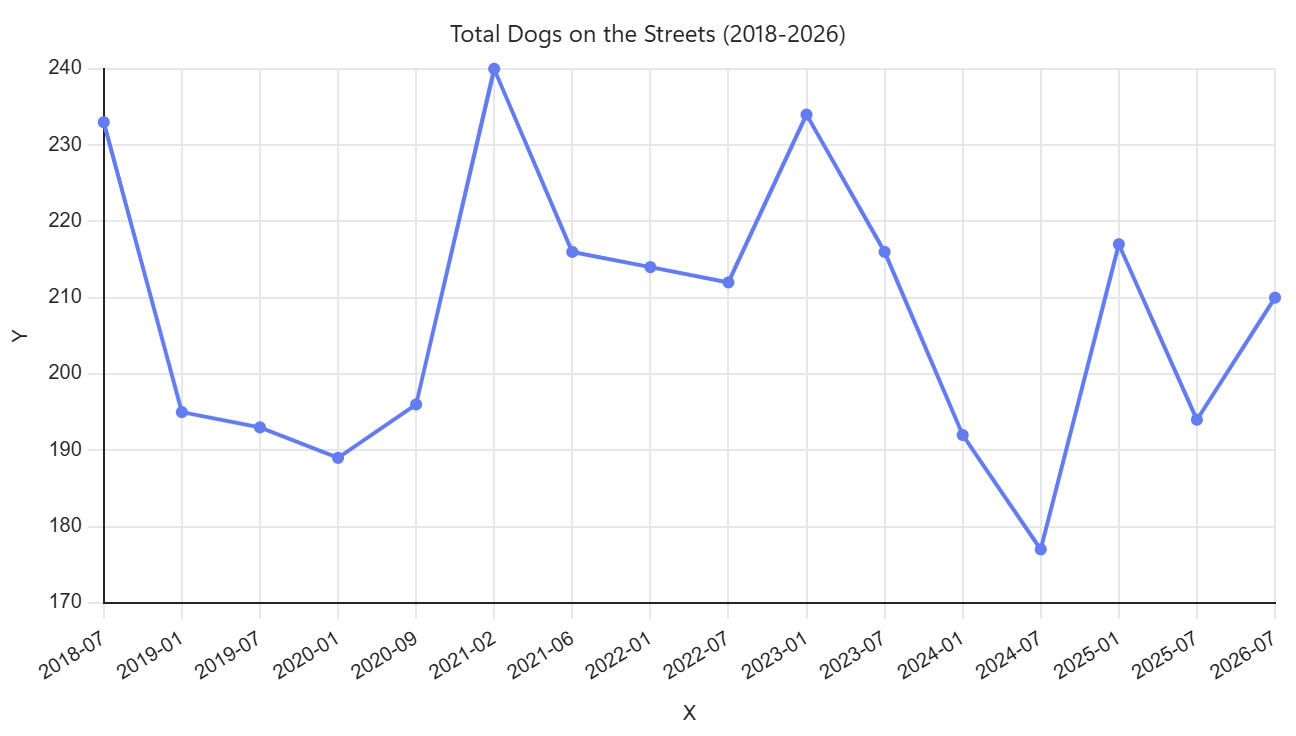
This year's census recorded 210 dogs across the survey zones.
Most importantly, the overall population remains remarkably stable compared with previous surveys (217dogs in January of 2025).
Population stability is exactly what successful street dog management should achieve. Instead of seeing continual population growth, the data suggests that years of sterilization efforts are helping keep numbers from increasing while allowing the community to gradually improve dog welfare.
In animal population management, stability is a sign of progress.
A Predominantly Adult Population
Of the 210 dogs observed:
- Approximately 97% were adults
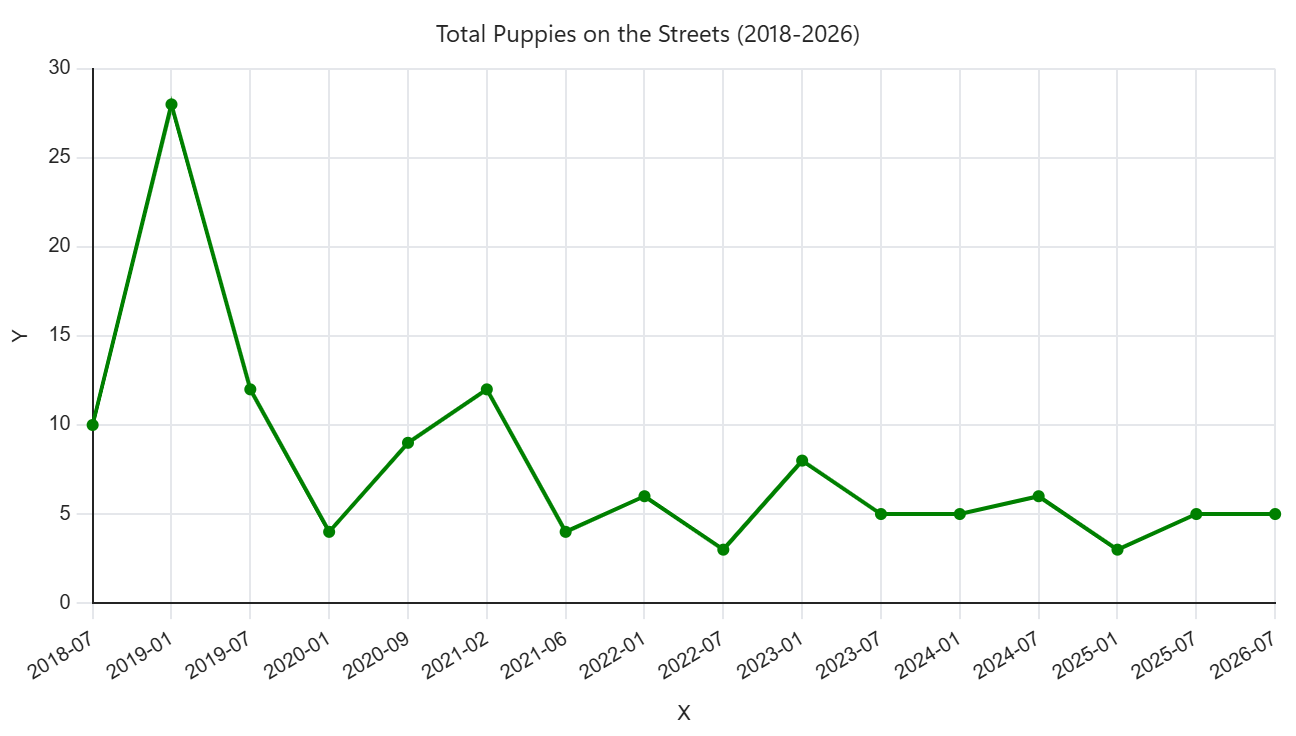
- Only about 3% were recorded as puppies (6 months or younger)
This is encouraging news. Large percentages of puppies often signal rapid population growth and high reproductive rates. Instead, our survey found a mature and relatively stable population with comparatively few young animals visible during the census period.
Most Dogs Appeared Healthy
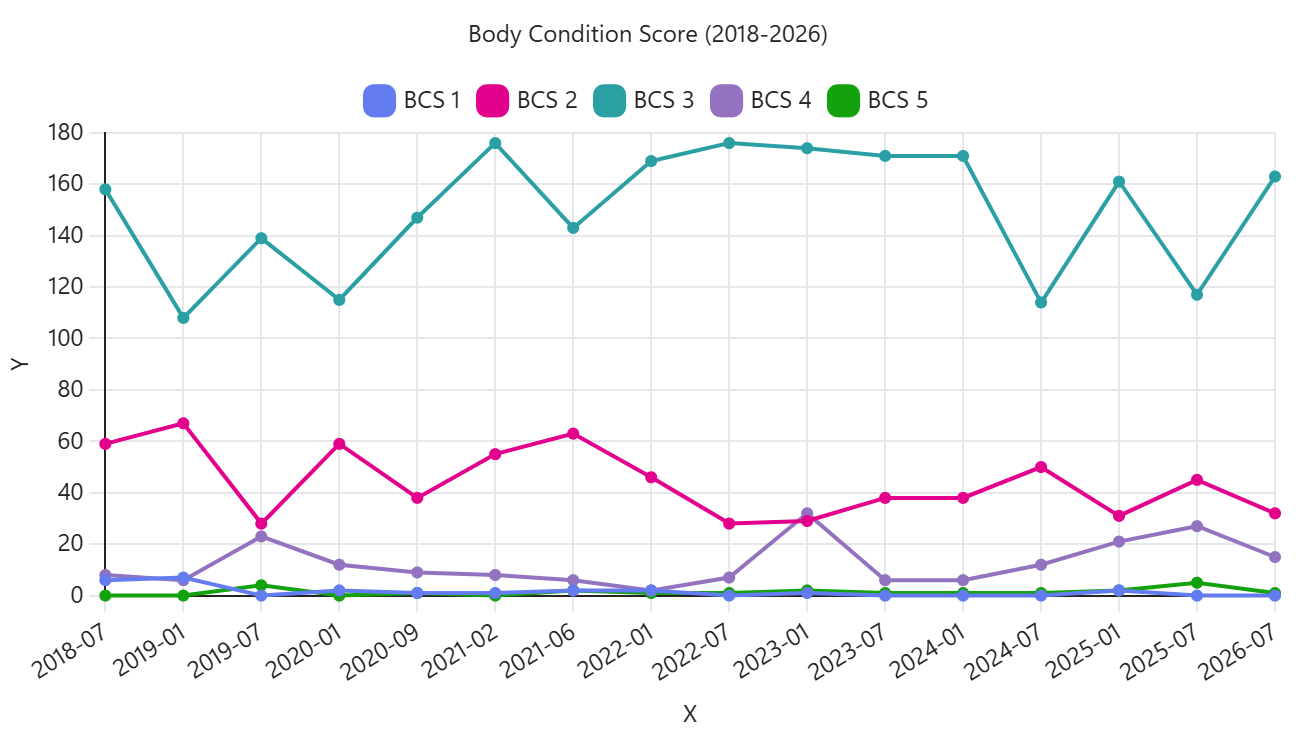
Volunteers evaluated each dog's Body Condition Score (BCS), a standard measure used to assess whether an animal is underweight, ideal weight, or overweight. The results were encouraging:
- Approximately 68% of dogs had an ideal body condition score of 3.
- About 16% scored 2, indicating they were somewhat thin.
- Approximately 15% scored 4 or 5, indicating above-average body condition.
In other words, nearly seven out of every ten dogs observed appeared to be maintaining a healthy weight.
This suggests that most dogs in the surveyed areas are successfully finding adequate food sources through community support.
Health Concerns Are Present but Not Widespread
The majority of dogs showed no obvious health problems during observation. Approximately 75–80% of dogs were recorded as having no visible health concerns, while the remaining dogs displayed issues such as tumors and skin conditions.
A Community of Free-Roaming Dogs
Approximately 90% of dogs observed were not wearing collars, while only 4.7% of dogs observed were wearing an owner collar.
The challenge is not simply a stray dog problem. It is a community dog management issue involving dogs that are owned but allowed to roam freely. That means education and community engagement remain just as important as sterilization.
What the Results Mean
Perhaps the most important takeaway from this year's census is that the data does not indicate a rapidly growing dog population.
While challenges remain, the census suggests that Cotacachi is benefiting from ongoing sterilization efforts and that continued investment in preventive programs can produce even greater improvements in the years ahead.
Thank You
This survey would not have been possible without the dedication of our volunteer teams. We’re grateful for their time and dedication to this endeavor.
The 2026 census gives us reason to be optimistic: the population remains stable, the majority of dogs appear healthy, and the work of creating lasting change continues to move in the right direction.